If you come in costume, you get free admission! Get it here.
Get an extra 10% off your online ticket when you sign up for our newsletter. Find out more here!

Utila Spiny-tailed Iguana

Theme area:  Poblado Central
Scientific name:  Ctenosaura bakeri
Class:  Reptiles
Continent:  Central America and the Caribbean
Habitat:  mangroves and nearby sandy coastal areas
Diet:  leaves, fruit, small invertebrates…
Weight:  females up to 450 g and males up to 1 kg
Size:  females up to 55 cm and males up to 75 cm, including the tail
altphoto altphoto altphoto altphoto

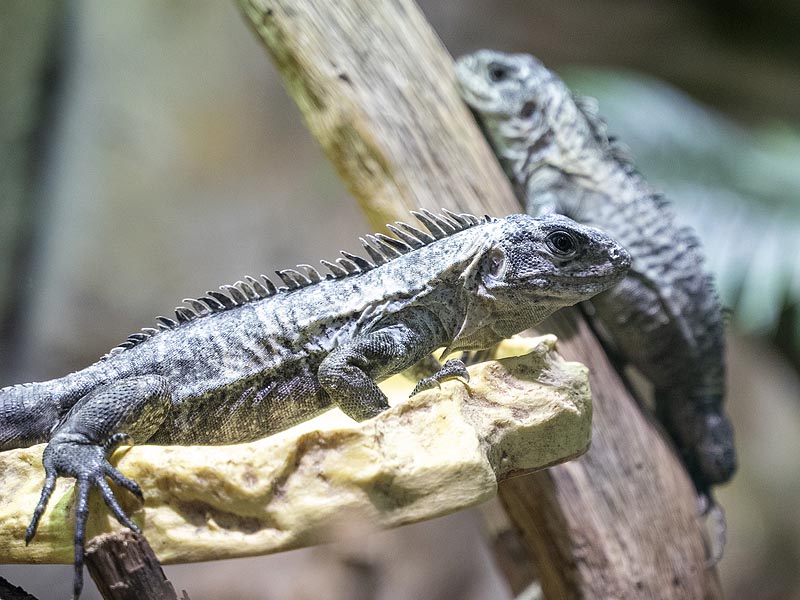
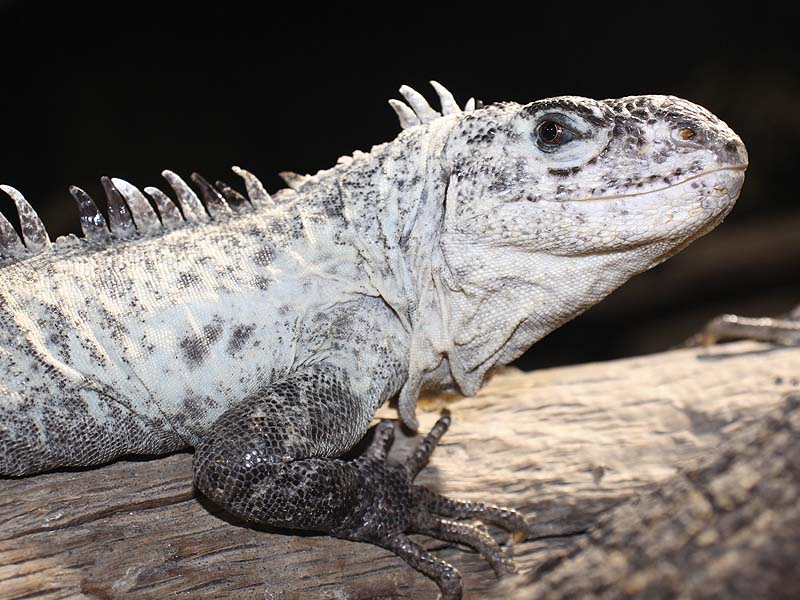
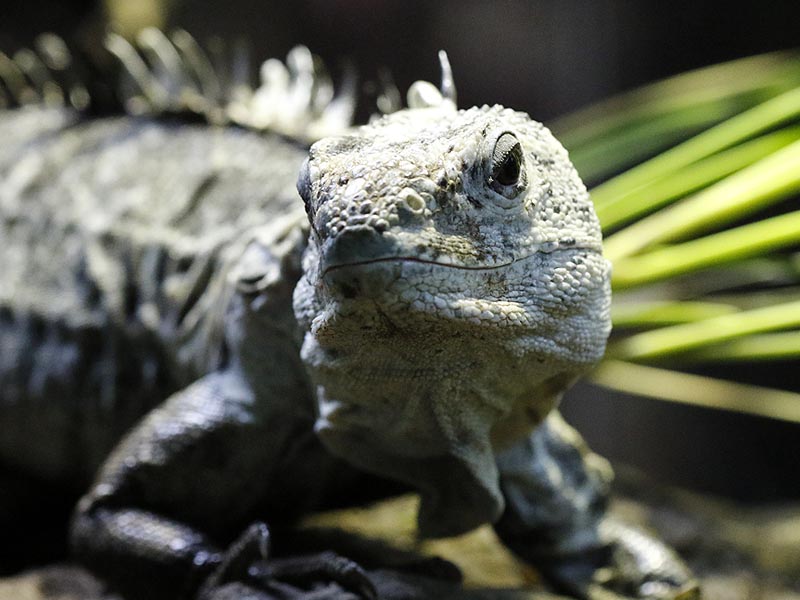
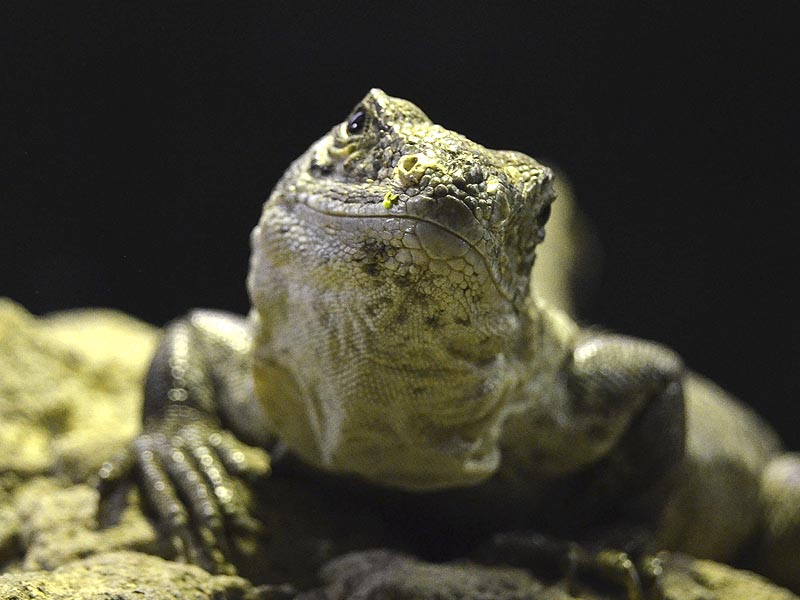
The Utila spiny-tailed iguana o Baker's spiny-tail iguana (Ctenosaura bakeri), also known as swamper or wishiwilly, is critically endangered and has the smallest range of any iguana species in the world. Inhabiting mangroves and sandy areas of adjacent beaches, though it can also be seen in landscaped areas, its entire population is confined to an area of just 6.5 km² on the small island of Útila, to which it is endemic, in the Honduran archipelago of the Bay Islands.

This iguana species is characterised by grey, black and bluish colouring, although it occasionally displays a light or predominantly whitish hue to regulate its body heat, reflecting the sun and preventing overheating, or in the days leading up to moulting. With marked sexual dimorphism, males have large spines along their bodies, which they raise when defending their territory; these are much smaller in females. In terms of size, males can be up to twice as large and heavy as females, reaching one kilogram in weight and 75 cm in total length, including the tail.

Critically endangered due to human pressure

Although there are currently connections between the different populations of the Utila spiny-tailed iguana, the species is threatened by tourism and urban development, which divert water, lead to the proliferation of waste and rubbish dumps, and cause habitat loss through mangrove degradation and deforestation. By affecting their migration routes, hybridisation with other iguana species could occur as their ranges increasingly overlap.

Similarly, humans are responsible for introducing invasive plant species, which degrade the sandy areas ideal for their nests, and animals that become new predators of eggs, juveniles and adults, such as raccoons, rats, and stray dogs or cats.

Furthermore, it is considered a delicacy in local culture, being a traditional dish particularly during Holy Week, when adult females of this and other species are hunted, whilst they still contain eggs inside them. As the Utila spiny-tailed iguana naturally relies on camouflage rather than fleeing in the presence of predators, it is easier to catch than other iguanas, with captures occurring even within protected areas.

Conservation Status
Extinct
Extinct in the wild
Critically endangered
Endangered
Vulnerable
Near threatened
Least concern
Insufficient data
Not evaluated

DID YOU KNOW...

it is the iguana with the narrowest distribution in the world? It inhabits almost exclusively certain mangrove areas on the island of Útila, in Honduras.
Live an authentic safari!

Live an authentic safari!

Online tickets from

€29.90

€19.90