If you come in costume, you get free admission! Get it here.
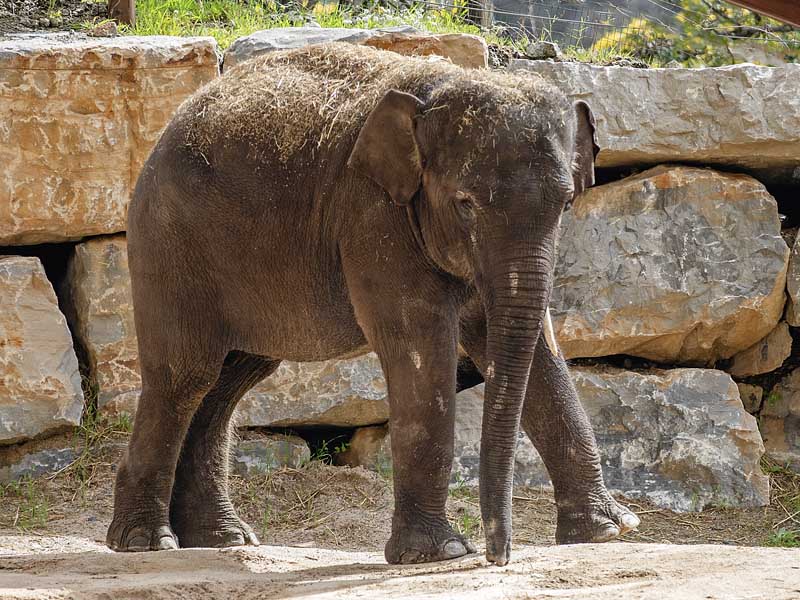
The Sumatran elephant (Elephas maximus sumatranus) is critically endangered, making it the most threatened of the four currently recognized subspecies of the Asian elephant (Borneo, Sri Lankan, Sumatran, and Indian). Due to its genetic uniqueness and the low probability of long-term survival of its wild populations, it is a subspecies with the highest priority for conservation in captivity within Asian elephant programs.
All the elephants housed at Selwo Aventura are part of the Endangered Species Conservation Programme (EEP) of the European Association of Zoos and Aquaria (EAZA), which closely coordinates their care in captivity based on genetic and demographic criteria for the management of the species and its eventual reintroduction into the wild.
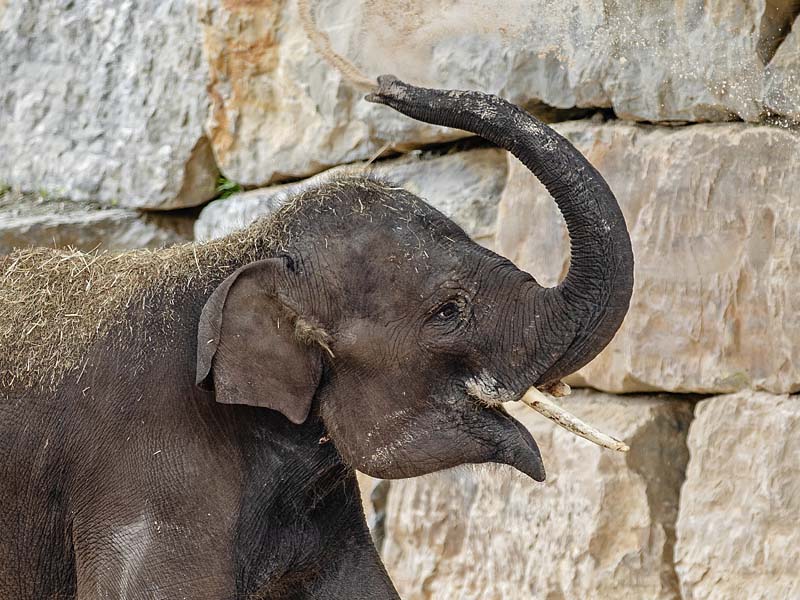
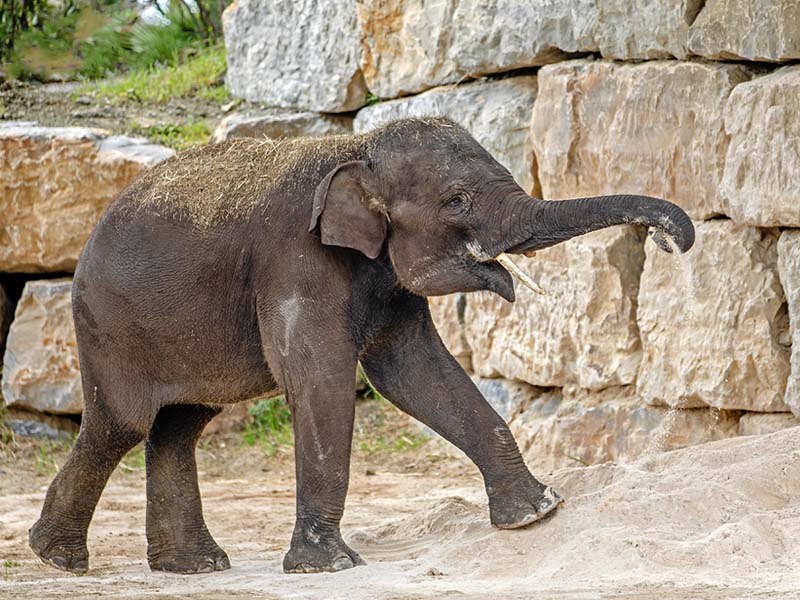
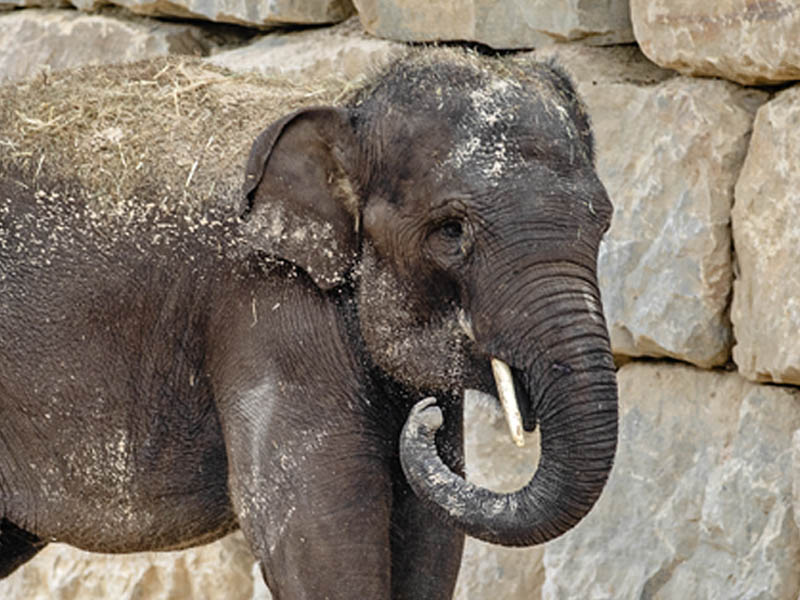
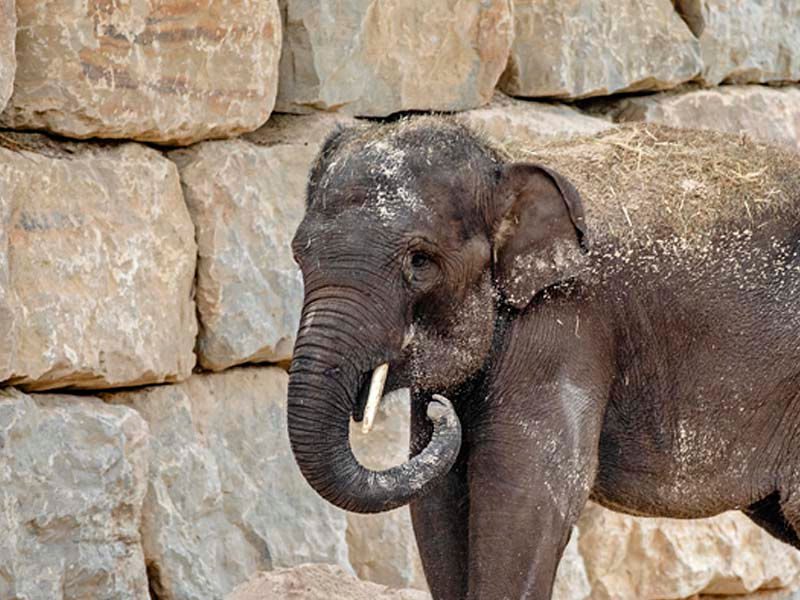
Although the traditional classification was based on physical criteria, DNA analysis shows that it evolved from a single ancestral population. Compared to other Asian elephants, the Sumatran elephant is smaller, with slightly larger ears, sparse hair and generally lighter, greyish-toned skin, which helps it blend into its surroundings. Only males have visible tusks; if present in females, they would be very small and only visible when the mouth is open. Furthermore, this subspecies has two additional ribs, totalling 20 pairs of ribs instead of 19.
The Sumatran elephant lives mainly in forests and gently sloping hills, where it finds the full range of plant food on which it feeds, at altitudes of up to 300 metres; these habitats are more vulnerable to degradation caused by human activity than those at higher altitudes. Sumatra, the sixth largest island in the world, has high rates of deforestation, and it is estimated that 80% of this species’ habitat has been lost over the last three generations. Although Indonesian law protects the Sumatran elephant, barely 15% of the areas it inhabits are protected, and these could be converted into agricultural land in the short term.
Furthermore, factors linked to climate change have altered their movement patterns, bringing them closer to human settlements and increasing conflicts between elephants and local communities, whilst also leading to more deaths from electric fences, compounded by poaching for ivory.
The scientific study, using various methods, concludes that between 1980 and 2008, Sumatra lost 50% of its elephants and 23 of its 44 populations. Although there are no subsequent systematic studies covering the whole island, outside protected areas, or for the Sumatran elephant subspecies, assessments in certain areas demonstrate the disappearance of most populations, which are highly fragmented, and the genetic unviability of others, suggesting that it is highly unlikely they will survive in the long term.