If you come in costume, you get free admission! Get it here.
Get an extra 10% off your online ticket when you sign up for our newsletter. Find out more here!

Hamerkop

Theme area:  Cañón de las Aves
Scientific name:  Scopus umbretta
Class:  Birds
Continent:  Africa
Habitat:  wetland areas in forests and grasslands
Diet:  small fishes, insects or amphibians
Weight:  about 425 grams
Size:  between 50 and 55 cm

altphoto altphoto

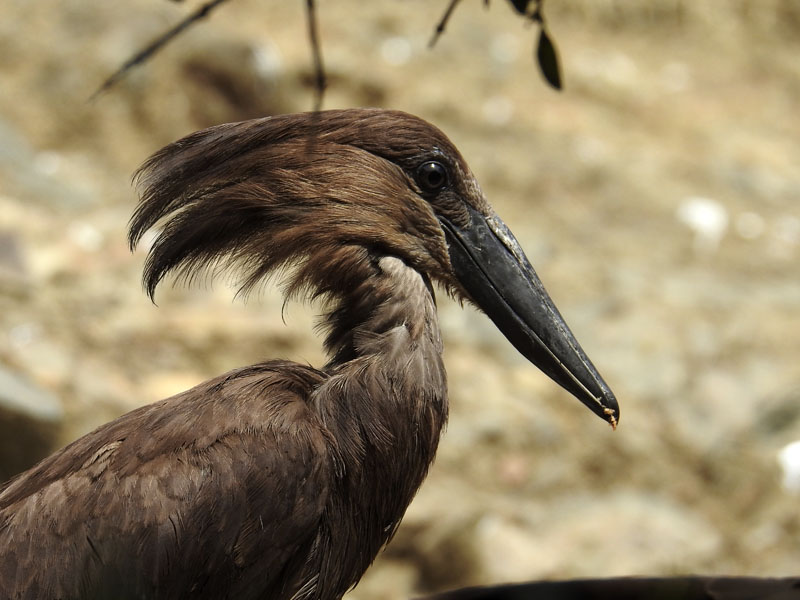
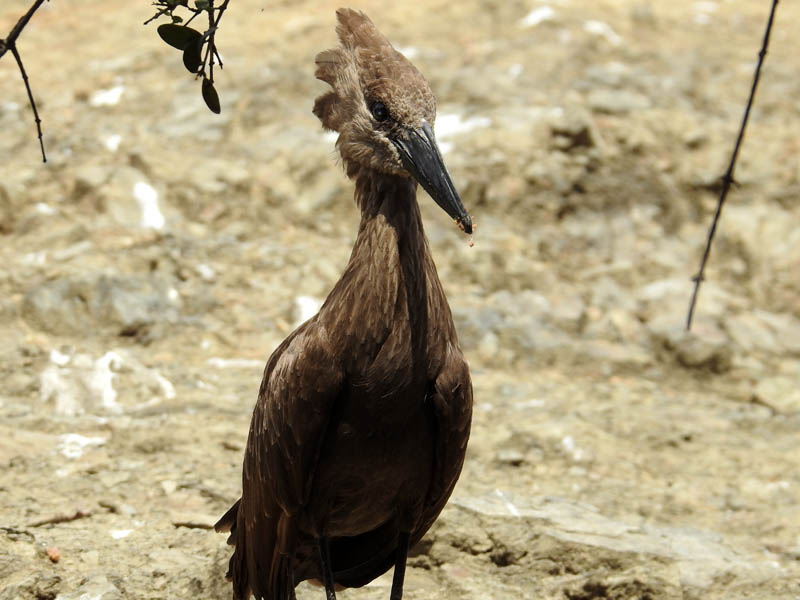
The hamerkop (Scopus umbretta), characterized by its distinctive long beak and crest of feathers, is an African pelicaniform bird with an elastic pouch on its throat that it can inflate and uses to communicate over long distances, emitting harsh, guttural sounds—high-pitched when flying and low-pitched during courtship. In this species, it is not only impossible to distinguish males from females with the naked eye, but there is also little difference between juveniles and adults.

A wetland inhabitant and builder of large nests

Found in all countries south of the Sahara, including Madagascar, the hamerkop is sedentary and does not migrate, only dispersing briefly during the rainy season. In fact, although it lives in any type of wetland where it can find food along the banks—mangroves, rivers, ponds, rice paddies, reservoirs—it adapts perfectly to the dry season, during which it is also able to breed. This is probably because the shallower water makes it easier to hunt prey such as fish or amphibians, and it can also feed on terrestrial invertebrates or small birds and mammals.

The hamerkop is most active at dawn and dusk, spending the rest of the day resting on tree branches, which are also an essential requirement for its habitat. There, it builds up to six large nests, up to 1.5 meters in diameter, enclosed and with an entrance at the bottom to protect itself from predators, although it only uses one of them. Although the reason for this behavior is unknown, it benefits other smaller birds, which use the unused nests or share the one being used by the hamerkop. The result of its impressive feat of engineering, which can take up to six months to complete, is often decorated on the outside with shells or small bones, as well as debris found in the surrounding area.

Myths and legends of the hamerkop in African popular culture

For various reasons, the hamerkop features prominently in some popular legends in Africa, generally of a negative nature. For example, due to its solitary habits and prehistoric appearance, it is considered a bird of ill omen, associated with death or tragedy in several sub-Saharan African cultures, who are wary of its presence near houses or villages or its powerful cry.

There is also the myth that it "forces" or "abducts" other birds to build its nest, which has also given it the nickname "sultan bird". However, once built by the pair of hamerkop, the reality is that small birds often add their nests to the structure or share the existing space; while on other occasions, owls, barn owls, kestrels, ferrets, genets, or even snakes take possession of the nest, permanently expelling its creators.

Conservation status
Extinct
Extinct in the wild
Critically endangered
Endangered
Vulnerable
Near threatened
Least concern
Insufficient data
Not evaluated

DID YOU KNOW...

it builds a larger nest than storks? While the hammerhead eagle only uses it once, storks expand theirs every year, eventually surpassing it in size.
Live an authentic safari!

Live an authentic safari!

Online tickets from

€29.90

€19.90