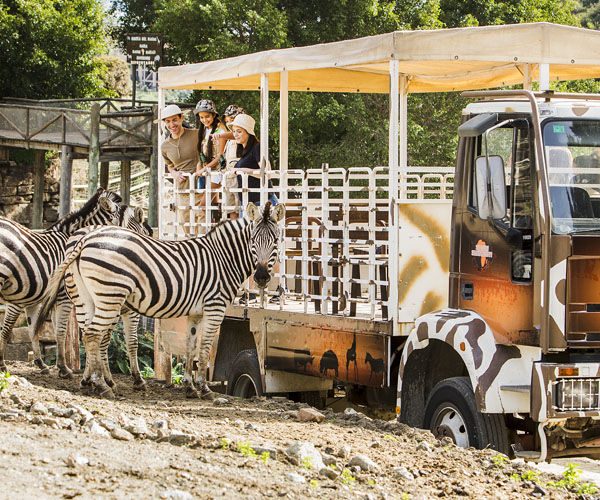
If you come in costume, you get free admission! Get it here.
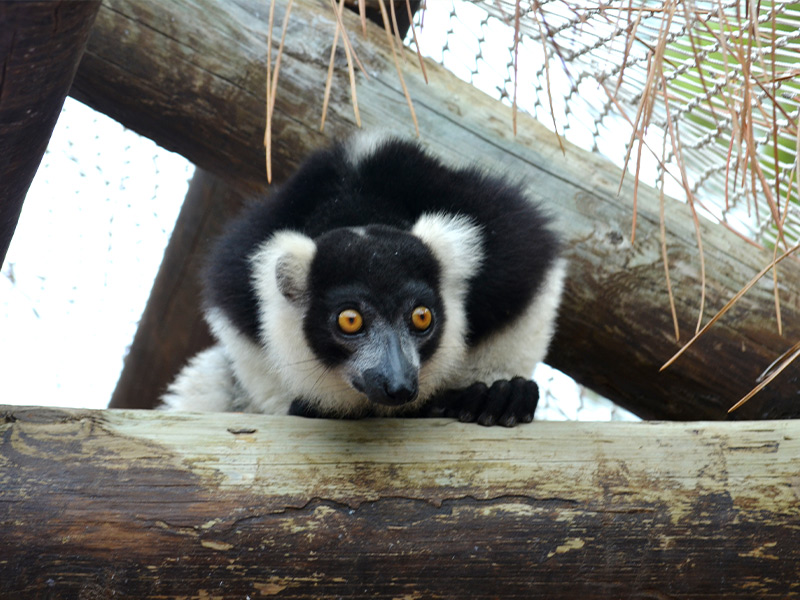
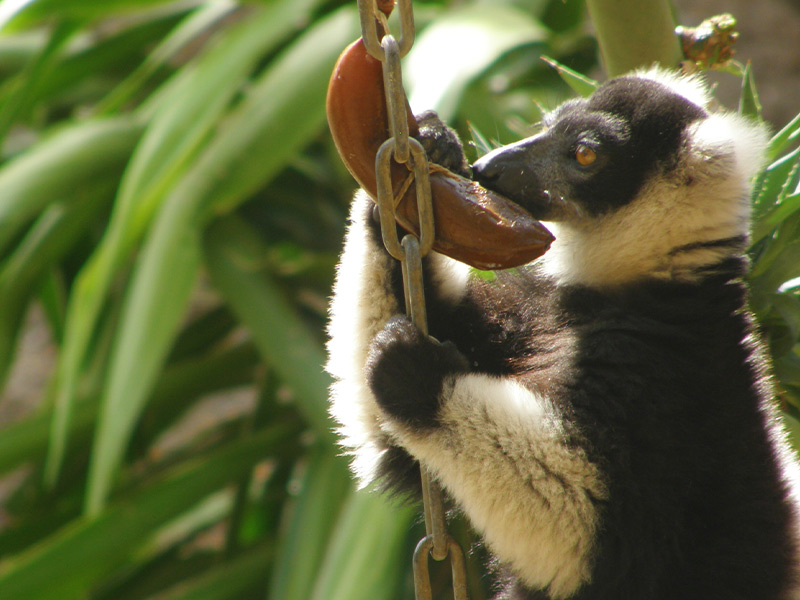
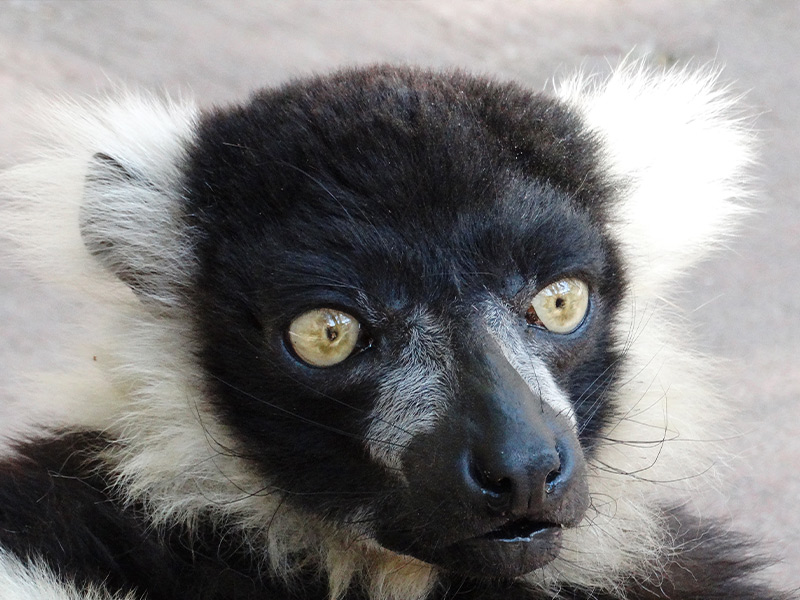
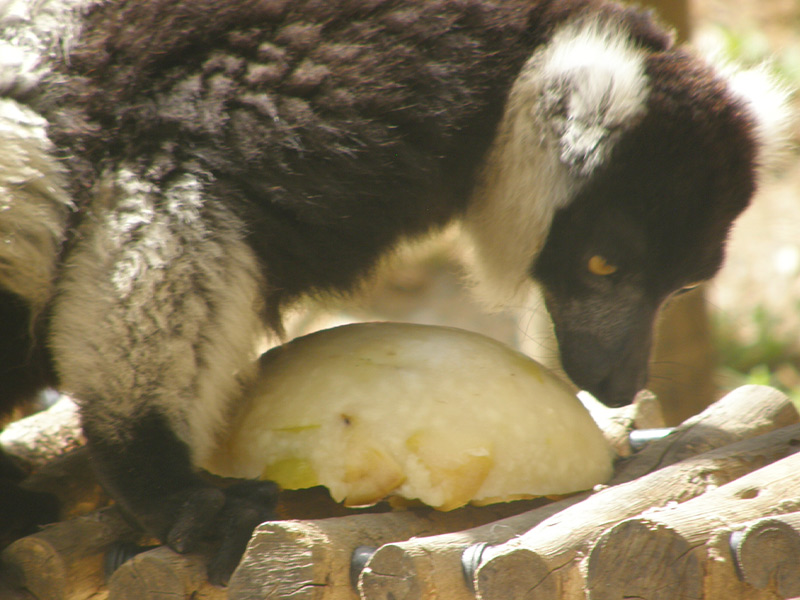
It is endemic to the eastern rainforest of Madagascar, located in the Indian Ocean. These lemurs are arboreal and spend most of their time in the tree canopy.
They are a crepuscular species, being more active in the evening. It lives in groups of 2 to 5 individuals, usually from the same family, which include a pair of adults and juveniles.
The female is slightly larger than the male and has a noticeably longer tail. Female lemurs are polyandrous, meaning that they mate with several males. The female will give birth to 1 to 3 young after 117 days of gestation. During the first 2-3 weeks the hatchlings will remain in the nest and after this period the female will transport them to other nests throughout the day to allow for foraging in different places. These nests have been built by the female before the birth of the young. They build up to 15 nests in different trees at a height of 10 to 20 meters. Communal nesting - lemurs from the same community helping each other to support their young - contributes to the reproductive success of this species and ensures the infant survival rate, although some females choose to raise their young alone, they are called "single nesters."
This species is threatened by habitat destruction, such as logging and burning of trees. This logging leads to easy access for poachers to the rainforest.
The Selwo Aventura group is part of the European Association of Zoos and Aquaria's (EAZA) European Endangered Species Conservation Program (EEP).